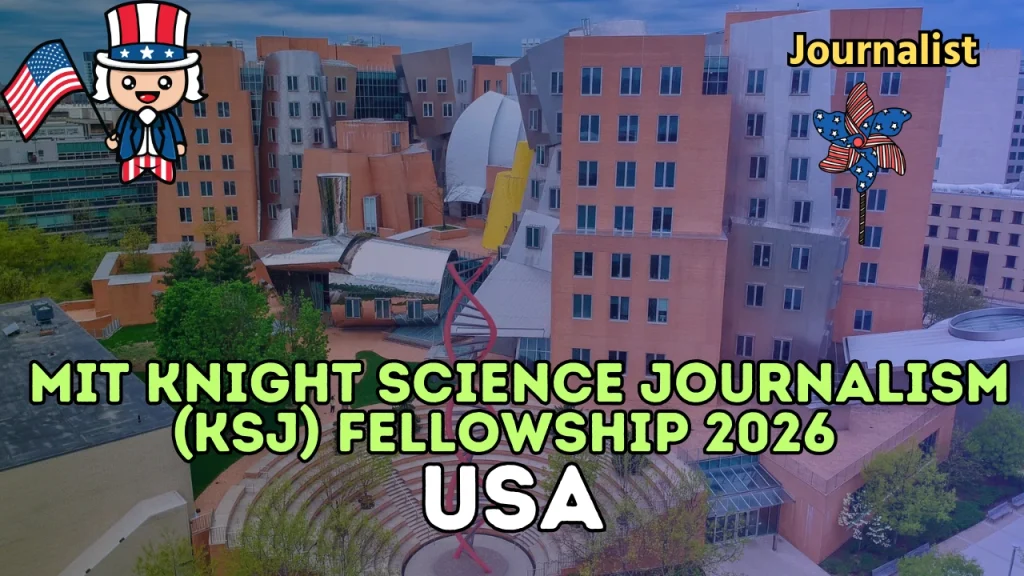
The MIT Knight Science Journalism (KSJ) Fellowship 2026 offers experienced journalists a nine-month immersive program at MIT to advance science reporting skills. Applications opened November 15, 2025, with a deadline of January 9, 2026. Within MIT, the Knight Science Journalism (KSJ) Program serves as a dedicated hub for advancing science journalism, offering fellows immersion in this innovation ecosystem through seminars, field trips to sites like Woods Hole Oceanographic Institution, and auditing privileges at MIT and nearby Harvard University.
Basic Information
- Fellowship Name: Knight Science Journalism (KSJ) Academic-Year Fellowship 2026-2027, a prestigious fully funded program hosted by MIT.
- Host Institution: Knight Science Journalism Program at the Massachusetts Institute of Technology (MIT), Cambridge, Massachusetts, USA.
- Duration: Nine months (mid-August to late May), spanning the MIT academic year with 9.5 months of stipend payments.
- Number of Awards: Up to 10 fellows selected annually from global applicants.
- Application Period: Opened November 15, 2025; closes January 9, 2026, at 11:59 PM EST.
- Funding Type: Fully funded, including stipend, travel/housing support, and health insurance for fellows and families.
- Target Audience: Full-time science, health, technology, or environmental journalists worldwide.
- Program Focus: Deepen expertise in science journalism through research projects, seminars, courses at MIT/Harvard, field trips, and skill workshops.
- Visa Support: J-1 visa sponsorship for international fellows via MIT’s International Scholars Office; English proficiency verified via interview or tests like IELTS/TOEFL.
- Recent Webinar: Live session held December 18, 2025, for application guidance.
What Fellows Do
- Work on a journalism-based research project (long-form, multimedia, book proposal, podcast, etc.)
- Attend seminars, workshops, and field trips
- Audit courses at MIT, Harvard, and nearby universities (at least one science course per semester)
- Present their project at the end of the fellowship
- Live full-time in Boston/Cambridge
- Do no outside paid work without permission
Program Highlights
- Expert seminars with top scientists and media professionals
- Field trips to leading research institutions
- Skill workshops (data journalism, video, audio, photography, podcasting)
- Strong academic and social community
University/Institution Details
- MIT Overview: Massachusetts Institute of Technology, a world-leading private research university in Cambridge, MA, is renowned for innovation in science, technology, engineering, and more.
- Knight Science Journalism Program: Dedicated hub supporting global science journalists with resources, networks, and programming embedded in MIT’s ecosystem.
- Location Advantages: The Cambridge/Boston area offers access to Harvard, Woods Hole Oceanographic Institution, Jackson Laboratory, and Harvard Forest for field trips.
- Facilities for Fellows: Auditing privileges at MIT, Harvard, and local universities; dedicated seminars, workshops on data journalism, podcasting, and mobile video.
- Community Building: Social events, welcome parties, and holiday celebrations to foster collegiality among fellows.
- Alumni Impact: Past fellows produce published works like books, podcasts, and articles on topics from AI in journalism to public health.
- Contact: Email [email protected] for queries; official site ksj.mit.edu.
Study Areas
- Core Focus: Science, health, technology, and environmental reporting; no formal degree, but journalism-related research projects.
- Research Projects: Self-directed journalism work like long-form narratives, multimedia series, video/audio projects, book proposals (no contracts during fellowship).
- Course Auditing: At least one science course per semester at MIT/Harvard; flexibility for journalism craft, data skills, new science specialties.
- Seminars: Regular sessions with top researchers and media professionals on cutting-edge topics.
- Workshops: Skills in mobile video, photography, digital editing, data journalism, podcasting.
- Field Trips: Visits to labs like Woods Hole, Marine Biological Lab, Jackson Laboratory for hands-on science exposure.
- Project Examples: Misinformation studies, AI’s journalism role, coal ash pollution impacts.
MIT Knight Science Journalism (KSJ) Fellowship Benefits
- Stipend: $85,000 stipend
- Travel Stipend: One-time payment near the start of the fellowship for relocation to Cambridge.
- Housing Stipend: One-time support to cover initial lease costs, broker fees, deposits in competitive market.
- Basic health insurance for fellow and family: Basic coverage for fellow and family (spouse, children).
- Academic Access: Free auditing of MIT/Harvard courses, seminar/field trip participation.
- Mentorship: Regular check-ins, end-of-year presentations; projects often lead to publications.
- Networking: Connections with MIT experts, Boston-area researchers, fellow journalists.
Benefits Not Included
- Moving Expenses: Fellows cover personal shipping beyond provided travel stipend.
- Outside Work: No paid professional work allowed without director approval.
- Advanced Housing: Stipend aids but doesn’t cover luxury rentals ($2,000-$5,000/month range).
- Dependents’ Extra Costs: Family insurance basic; schooling/daycare separate.
- Visa Fees: Applicant handles initial costs; MIT sponsors J-1/J-2.
- Daily Meals/Entertainment: Stipend covers, but no meal plan included.
- Book Contracts: Cannot sell proposals or arrive with contracts during the term.
Eligibility Criteria for MIT Knight Science Journalism (KSJ) Fellowship
- Journalism Experience: Minimum 3 consecutive years of relevant reporting
- Employment Status: Full-time journalists (staff/freelance); no part-timers.
- Roles Covered: Reporters, writers, editors, producers, illustrators, filmmakers, photojournalists across print, TV, radio, and digital.
- Recent Fellowships: No fellowship of 4+ months in the last 2 years (explain shorter/supplemental ones).
- International Welcome: Open worldwide; English proficiency via interview/IELTS/TOEFL if needed.
- Commitment: Full-time Cambridge residency mid-August to May; no outside paid work.
- Exclusions: Must demonstrate professional excellence and long-term journalism dedication.
Required Documents
- Professional Autobiography: 500 words max on why KSJ fits your goals.
- Resume/CV: Education, work history, honors; freelancers’ list, past 12 months’ clips with dates/venues.
- Research Project Proposal: 500 words max, journalism-based, leveraging MIT/Boston resources (any format).
- Work Samples: 5 work samples (English or translated)
- References: 3 recommendation letters from work acquaintances; auto-requested via portal.
- AI Policy: No AI authorship; disclose minor editing use.
- Account Creation: Required for online portal submission.
MIT Knight Science Journalism (KSJ) Fellowship Application Process
- Step 1: Create account on ksj.mit.edu application portal before the deadline.
- Step 2: Prepare documents: autobiography, CV, proposal, samples, references (500 words limits where noted).
- Step 3: Submit online by January 9, 2026, 11:59 PM EST; ensure recommenders meet the deadline.
- Step 4: Review phase (Jan-Mar) by KSJ panel including directors Usha Lee McFarling, Ashley Smart.
- Step 5: Semifinalists notified early March for video interviews.
- Step 6: Final 10 fellows announced April 2026.
- Step 7: Selected fellows secure housing, visas; start mid-August.
Tips for a Successful Application
- Tailor Proposal: Link project to MIT/Boston resources like specific labs/courses.
- Showcase Clips: Select samples proving science journalism depth/impact.
- Strong Autobiography: Connect KSJ to career growth, not generic praise.
- References Matter: Choose advocates who detail your commitment/excellence.
- Avoid AI: Write authentically; disclose edits only.
- Attend Webinar: Review recordings for insights (e.g., Dec 18 session).
- Proofread: Non-native speakers, consider proficiency test for edge.
- Early Prep: Freelancers compile 12-month client list now.
Monthly Living Expenses (USD)
- Housing: $2,000-$5,000 (1-bed city center ~$2,574; shared cheaper).
- Food/Groceries: $350-$709 single; $1,836 family (milk $1.22/L, bread $3.97).
- Transport: $65-$150 (monthly pass $90; taxi $17).
- Utilities: $126 single, $190 family (internet $68).
- Entertainment: $45-$100 (gym $100, cinema $15).
- Total Single: $3,000-$3,800 (Cambridge avg $3,768).
- Family of 4: $6,500-$7,700.
Why Choose This Scholarship?
- Generous Funding: A $85k stipend comfortably covers high Cambridge costs.
- MIT Access: Audit elite courses, network with top scientists.
- Project Freedom: Pursue passion journalism with mentorship/publications.
- Global Prestige: Boosts career; alumni publish books/podcasts.
- Comprehensive Support: Travel/housing/health for families.
- Skill Building: Workshops/field trips enhance multimedia/data expertise.
- Community: Build lifelong bonds in an innovation hub.
Frequently Asked Questions
- Q: Can freelancers apply? A: Yes, with 3+ years full-time equivalent; list recent clips.
- Q: English test required? A: Not always; an interview suffices, tests strengthen non-native apps.
- Q: Family allowed? A: Yes, with J-2 visas, basic insurance.
- Q: Can I work part-time? A: No, unless director-approved.
- Q: Repeat applicant? A: Welcome; note the earlier 2026 deadline.
- Q: Housing help? A: Stipend/staff advice; secure a lease yourself.
- Q: Post-fellowship? A: Return to journalism; leverage projects/networks.
Application Timeline (2026–2027)
- Opens: November 15, 2025
- Deadline: January 9, 2026
- Interviews: March 2026
- Final selection: April 2026