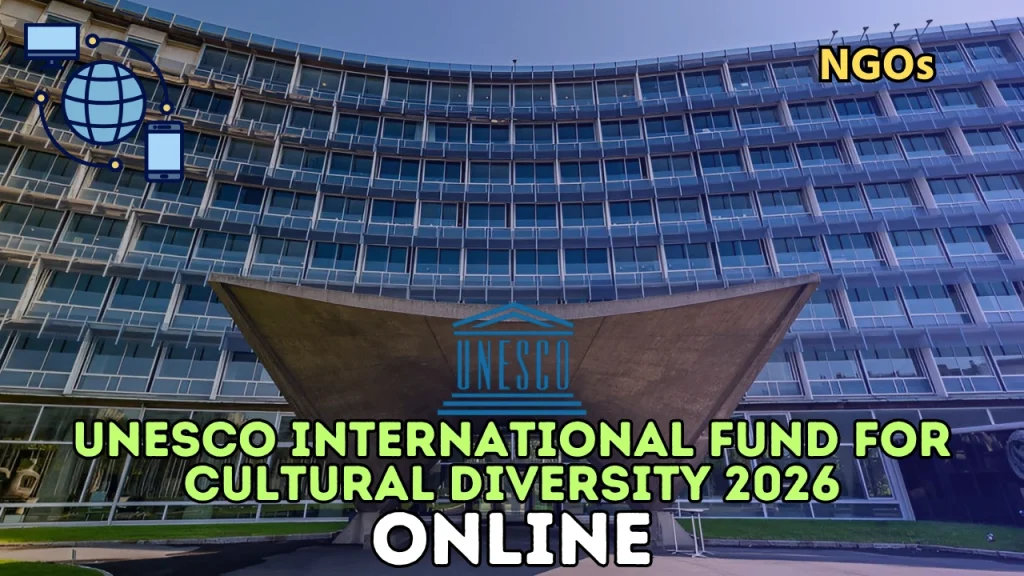
The UNESCO International Fund for Cultural Diversity (IFCD) 2026 offers project grants of up to $100,000 USD for cultural and creative sector initiatives in developing countries that are Parties to the 2005 UNESCO Convention. This competitive funding supports innovative projects strengthening cultural policies, creative industries, and diversity of cultural expressions, with applications open from March 23 to May 6, 2026 (12:00 noon Paris time).
Basic Information about the Scholarships
- Fund name: UNESCO International Fund for Cultural Diversity (IFCD) 2026.
- Funding body: UNESCO (United Nations Educational, Scientific and Cultural Organization).
- Funding type: Project grants (not individual scholarships).
- Maximum grant: US$100,000 per project.
- Project duration: 12-24 months, starting earliest April 2026.
- Application period: 23 March – 6 May 2026 (12:00 noon Paris time).
- Eligible applicants:
- Evaluation: International Panel of Experts assesses relevance, feasibility, financial capacity, expected results.
University/Institution Details
The IFCD is administered directly by UNESCO through its Convention and Intangible Cultural Heritage Section in Paris, not affiliated with any specific university. Eligible recipient organizations implement projects in their home countries or regions, focusing on cultural industries, policy development, and creative sector capacity building. Projects must demonstrate structural impact on systems, institutions, and capacities supporting diverse cultural expressions.
Main Purpose
- Develop cultural and creative sectors
- Support:
- Creation & production
- Distribution
- Access to cultural goods/services
🎨 Eligible Sectors
- Audio-visual / Cinema
- Design
- Media arts
- Music
- Performing arts
- Publishing
- Visual arts
Study Areas
- Cultural policy development:
- Creative sector capacity building:
- Cultural production and distribution:
- Access to diverse cultural expressions:
- Priority impact areas:
UNESCO International Fund for Cultural Diversity Benefits
- Project grant: Maximum $100,000 USD for eligible initiatives.
- Max amount: $100,000
- Payment structure:
- 50% at start
- 30% mid-project
- 20% after completion
- Must include:
- Communication costs External financial audit
- Implementation period: 12-24 months project execution.
- Technical assistance: UNESCO project monitoring and evaluation support.
- Networking opportunities: Access to UNESCO cultural networks and visibility.
- Capacity building: Knowledge exchange with other funded projects.
- Global recognition: UNESCO endorsement enhances credibility.
Benefits not included
- Individual scholarships/stipends – organizational project funding only.
- Operational costs exceeding 20% of total budget.
- Infrastructure construction (buildings/equipment).
- Staff salaries beyond project implementation roles.
- Projects lacking regional/sub-regional impact.
- Retrospective funding for already-completed activities.
Eligibility Criteria for the UNESCO International Fund for Cultural Diversity
- Eligible countries: Developing countries that are Parties to the 2005 UNESCO Convention.
- Applicant organizations:
- Financial capacity: Proven project management and financial reporting ability.
- Implementation timeline: Must start April 2026 earliest (post-Committee approval).
- Languages: Applications accepted in English or French.
Types of Projects (Examples)
- Cultural policy development
- Training & capacity building
- Support for cultural entrepreneurs
- Market access for cultural products
- Digital cultural industries
- Gender equality in culture
- Participation of vulnerable groups
- Research, data, and strategy tools
❌ Not Eligible
- Only producing artworks/events
- Cultural heritage projects
- Construction/renovation
- Scholarships/personal grants
- Debt repayment
- Tourism-focused projects
- School-level projects
Required Documents for the Application
- Online registration via IFCD platform.
- Completed application form (English/French).
- Detailed project proposal demonstrating:
- Organizational documents:
- Letters of support from partners/stakeholders.
- Budget template (maximum $100,000 request).
UNESCO International Fund for Cultural Diversity Application Process
- Step 1: Verify eligibility – confirm developing country Party status and organizational type.
- Step 2: Register on IFCD online platform (March 23, 2026 opening).
- Step 3: Review 2026 Call for Funding brochure and guidelines.
- Step 4: Develop project proposal with regional/sub-regional impact.
- Step 5: Complete online application form with all documents.
- Step 6: Submit before May 6, 2026 (12:00 noon Paris time).
- Step 7: International Panel evaluation (June-July 2026).
- Step 8: Intergovernmental Committee approval (February 2026); project start April 2026.’
Selection Process
- National Commission pre-selection
- UNESCO technical check
- Expert panel evaluation
- Final decision (Jan 2027)
📊 Evaluation Criteria
- Relevance to cultural development
- Clear, realistic results
- Long-term impact
- Sustainability
- Financial accountability
- Strong team & stakeholder involvement
Tips for a Successful Application
- Emphasize regional impact – local-only projects rarely funded.
- Strong budget justification – operational costs ≤20%.
- Proven track record – include past project success stories.
- Multi-stakeholder partnerships – Letters of support boost credibility.
- Sustainable outcomes – focus on lasting policy/system changes.
- Apply early – platform busy near deadline.
- English/French clarity – professional translation essential.
Monthly Living Expenses for International Students
Note: Expenses represent project costs, not individual living allowances.
Why Choose This Scholarship?
- Substantial funding – up to $100,000 competitive grants.
- Global UNESCO prestige – enhances organizational credibility.
- Regional impact focus – strengthens cross-border cultural cooperation.
- Creative sector priority – supports artists, cultural workers, industries.
- Flexible implementation – 12-24 months across developing countries.
- Technical support – UNESCO monitoring/capacity building assistance.
- Sustainable development alignment – advances cultural policy globally.
Frequently Asked Questions about the scholarship
Individual scholarships?
No – organizational project grants only.
Maximum funding?
$100,000 USD maximum per project.
Application deadline?
6 May 2026 (12:00 noon Paris time).
Eligible countries?
Developing countries Parties to 2005 Convention.
Project duration?
12-24 months, starting April 2026 earliest.
Languages accepted?
English or French applications.
Evaluation criteria?
Relevance, feasibility, financial capacity, expected results.
Key Info
- Launch date: 23 March 2026
- Deadline: 6 May 2026 (12:00 PM Paris time)
- Project duration: 12–24 months
- Start: From May 2027 (earliest)
- Language: English or French