
Studying in Switzerland is a dream for ambitious international students, but high living costs can often make it feel out of reach. The University of Bern Scholarship 2027 framework (encompassing University Master Grants, Faculty Merit Waivers, and the Swiss Government Excellence Scholarships) provides a fully funded pathway to study at one of Europe’s top research institutions.
Located in the historic capital city of Switzerland, the University of Bern combines world-class academic standards with an exceptional quality of life. This SEO-optimized guide details everything you need to know about the 2027 application cycle, including eligibility criteria, financial coverage, step-by-step processes, and realistic living expenses.
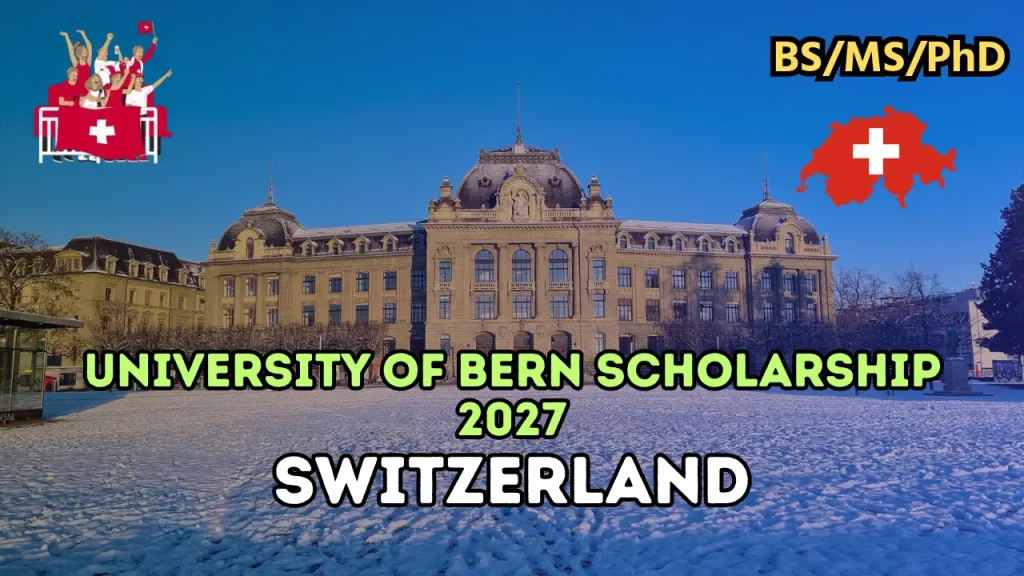
Basic Information & Key Deadlines
The University of Bern provides various scholarship avenues for international applicants pursuing Master’s and Doctoral (PhD) degrees. Funding comes through institutional grants, private foundations, and the prestigious Swiss Federal Commission for Scholarships.
- Host University: University of Bern (Universität Bern)
- Host Country: Switzerland
- Target Level: Master’s, Doctoral (PhD), and Postdoctoral research
- Eligible Nationalities: Open to all international applicants (with special emphasis on partner institutions and developing nations depending on the grant).
- Application Cycle Opens: September – October 2026
- Application Deadlines:
- Swiss Government Excellence Scholarships: September 30 – November 30, 2026 (varies by home country embassy).
- University of Bern Master Grants & Partner Fellowships: December 1, 2026 – January 31, 2027.
- General University Academic Admission: April 30, 2027 (for Fall semester entry).
University/Institution Details: The Bern Advantage
Founded in 1834, the University of Bern is a comprehensive public research university rooted in the heart of Switzerland. Ranked consistently among the top 120 universities globally (QS World University Rankings), Bern is celebrated for its interdisciplinary research, cutting-edge space exploration contributions (such as instruments sent to Mars and Comet 67P), and prominent climate change research institutes.
Unlike campus universities isolated on city fringes, the University of Bern is integrated directly into the city’s historic center—a UNESCO World Heritage site. Studying here places you steps away from federal Parliament buildings, international agencies, and vibrant cultural hubs.
Study Areas & Available Programs
The University of Bern offers over 40 Master’s programs and extensive PhD tracks taught in both English and German.
Key Faculties & Disciplines Covered:
- Faculty of Science: Climate Sciences, Physics, Chemistry and Molecular Sciences, Earth Sciences, Bioinformatics, Computer Science.
- Faculty of Business, Economics, and Social Sciences: International Economics, Applied Economic Analysis, Business Administration, Political Science, Sociology.
- Faculty of Medicine & Veterinary Medicine: Biomedical Engineering, Precision Medicine, Artificial Intelligence in Medicine. (Note: Clinical medical training is restricted to Swiss citizens/residents, but research-focused Master’s/PhD programs are open to international applicants).
- Faculty of Humanities: History, Philosophy, English Languages and Literatures, Art History, Archaeology.
- Faculty of Law: World Trade Institute (WTI) programs including International Law and Economics (MILE).
Types of University of Bern Scholarship 2027
- Swiss Study Foundation
- Scholarships Canton of Bern
- Swiss Government Excellence Scholarships
- swissuniversities
- SEMP
- Heyning-Roelli Foundation
University of Bern Scholarship Benefits:
- Full or partial tuition fee coverage
- Monthly stipend for living expenses
- Accommodation support
- Health insurance coverage
- Travel allowances
- Research and study grants
- Access to university resources and networking opportunities
Benefits Not Included:
- Personal expenses beyond the provided stipend
- Costs related to family members
- Visa application fees
- Initial travel expenses (unless specified)
Eligibility Criteria for University of Bern Scholarship:
- Open to international students from all nationalities
- Excellent academic record
- Those with a bachelor’s degree are eligible to apply for master’s programs, and those with a master’s degree are eligible to apply for doctoral programs.
- Language Proficiency:
- English-taught programs: TOEFL iBT (minimum 92-100) or IELTS Academic (minimum 7.0 overall).
- German-taught programs: C1 level Goethe or TestDaF certificate (if applying to German-instructed streams).
- Additional eligibility requirements may vary depending on the specific scholarship
Required Documents for the Application
To ensure a smooth evaluation, gather these digitized documents early:
- Completed Online Scholarship Form: Filled out via the official university or government portal.
- Official Academic Transcripts & Diplomas: Certified copies in original language, plus official English or German translations.
- Detailed Curriculum Vitae (CV): Europass format preferred, highlighting publications, research experience, and leadership roles.
- Statement of Purpose (Motivation Letter): Max 2 pages articulating why you chose the University of Bern, your academic trajectory, and long-term career goals.
- Two Confidential Academic Reference Letters: Signed by university professors on official institutional letterhead.
- Language Proficiency Certificate: Valid IELTS, TOEFL, or recognized German language scores.
- Research Proposal (For PhD Applicants): A detailed 5-page proposal detailing research methodology, objectives, and faculty alignment.
University of Bern Scholarship Step-by-Step Application Process
Because scholarship deadlines pre-date standard university enrollment, follow this structured roadmap:
1.Find a Faculty Supervisor (PhD/Research Focus):August – September 2026.
If applying for research tracks or Swiss Government scholarships, contact a University of Bern professor willing to host your research and sign a formal support letter.
2.Submit Embassy or Portal Applications:September – November 2026.
Complete your primary scholarship profile via your local Swiss Embassy (for Government Excellence funds) or the University of Bern’s online portal (for Master Grants).
3.Apply to University of Bern Academic Admissions:December 2026 – January 2027.
Submit a parallel academic application directly to the University of Bern Admissions Office for your chosen Master’s or PhD program before the institutional deadline.
4.Document Review & Interview Stages:February – April 2027.
Shortlisted candidates undergo faculty reviews or virtual interviews conducted by selection committees.
5.Award Acceptance & Visa Processing:May – June 2027.
Successful scholars receive official award letters. Use these to apply for your Swiss Type D long-stay student visa at your nearest Swiss representation.
Tips for a Successful Application
- Reach Out to Professors Early: For research degrees, a generic email won’t work. Read recent papers published by Bern professors, mention specific labs, and explain how your past research integrates into their current projects.
- Demonstrate Regional Impact: The selection panel favors applicants who articulate how their degree will address pressing global issues or benefit their home country upon graduation.
- Translate & Certify Accurately: Swiss university admissions are strict regarding documentation. Ensure all non-English or non-German documents are translated by certified translators.
- Emphasize Sustainability & Innovation: Bern places high value on sustainability and interdisciplinary thinking. Weave these themes into your motivation letter.
Monthly Living Expenses for International Students in Bern
Switzerland is famous for its high standard of living, which corresponds to higher monthly expenses. The table below breaks down realistic monthly costs in Bern, converted to USD ($):
| Expense Category | Estimated Monthly Cost (USD) | Local Insider Context |
| Accommodation | $750 – $1,100 | Student housing (WG shared flats or student residences like Student Lodge) |
| Food & Groceries | $350 – $500 | Cooking at home using discount supermarkets (Lidl, Aldi, Denner) |
| Health Insurance | $100 – $220 | Subsidized student health plans (Swisscare, AcademicCare) |
| Public Transport | $60 – $90 | Local Libero pass or SBB Half-Fare travelcard |
| Course Materials & Supplies | $50 – $80 | Books, printing, and lab consumables |
| Personal & Leisure | $180 – $300 | Cafes, museums, and exploring the Swiss Alps |
| Total Estimated Budget | $1,490 – $2,290 / month | Fully covered by a full Bern / Swiss Government Stipend! |
Why Choose the University of Bern? (5 Core Reasons)
- World-Class Academic Excellence: Learn directly from pioneering researchers in climate change, space science, and global trade law.
- Unbeatable Quality of Life: Bern is repeatedly ranked among the world’s safest, cleanest, and most livable cities, featuring pristine public infrastructure and the stunning Aare River.
- Central European Hub: Located in the center of Europe, Bern offers easy train connectivity to Paris, Milan, Frankfurt, and Zurich.
- Multilingual Environment: Immerse yourself in a culturally diverse region where German, French, and English meet seamlessly in daily life.
- High Employability: Swiss master’s degrees are recognized globally, giving graduates a strong edge in international organizations, multinational tech firms, and research labs.
Frequently Asked Questions (FAQs)
Can I work part-time while studying at the University of Bern?
Yes. International non-EU/EFTA students are allowed to work up to 15 hours per week during the semester, but only after completing their first 6 months of study in Switzerland.
Is German proficiency mandatory for all Master’s programs?
No. While many undergraduate programs are taught in German, the University of Bern offers numerous specialized Master’s and PhD programs conducted entirely in English.
What happens if my academic degree is still in progress when I apply?
You can apply with a provisional transcript showing your completed semesters to date. You must submit your final graduation certificate before the semester officially begins in September.
Are there age limits for the scholarship?
The University of Bern Master Grants generally do not enforce strict upper age limits, provided your bachelor’s degree was earned within the last 5 years. However, specific government excellence schemes may have age guidelines (usually under 35 for PhD tracks).
Application Deadline:
The last date to apply for the University of Bern Scholarship Programs 2027 in Switzerland for international students varies according to different scholarships.
- Swiss Government Excellence Scholarships: 1st December 2026
- Heyning-Roelli Foundation Scholarship: 31st March 2027
- SEMP Scholarship: Varies depending on the program
Official Link
Dalarna University Masters Scholarships 2027 in Sweden
University of Toronto Postdoctoral Fellowship 2027 in Canada


Opportunités professionnelles et réseau international
L’étude à l’étranger est souvent citée pour mettre les diplômés en avant sur le marché du travail international. Les expériences internationales sont considérées comme un atout par de nombreux employeurs, car elles démontrent une capacité d’adaptation et une ouverture d’esprit. De plus, les étudiants peuvent créer un réseau global précieux, ouvrant la voie à des stages, collaborations ou carrières à l’international traduire en englait